Church Team
Certified lay ministers do not serve alone. Every certified lay minister is supported by a group of people from the congregation who provide encouragement, discernment, accountability, and ongoing support for their ministry.
This page explains who serves on that team, what their role is, and how existing leadership structure like church council and S/PPRC congregations serve important roles in providing support and accountability throughout the process.
Who Serves on the Team?
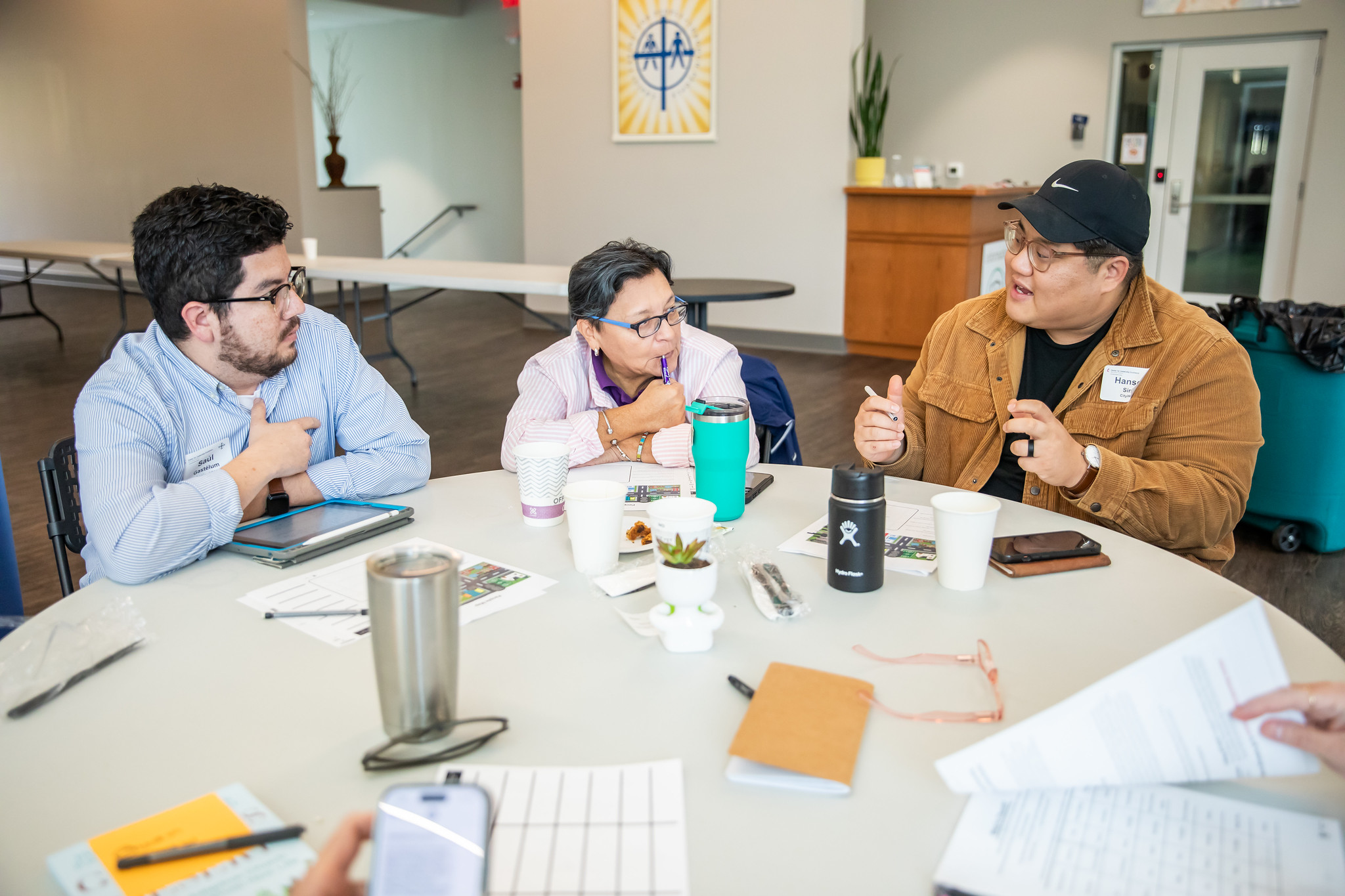
During the Candidate Training Program, CLM candidates form a mutual ministry team (MMT). The MMT includes the CLM candidate, their clergy mentor (usually the pastor of their membership church), and three to five additional laity from the congregation.
Together, the candidate and clergy mentor invite individuals who can support the candidate’s discernment, learning, and ministry development. Team members could include leaders who are:
- familiar with the congregation’s mission and ministries
- actively involved in the congregation’s leadership and decision-making
- knowledgeable about the candidates gifts and calling
- willing to ask honest questions and offer encouragement
Churches often include leaders such as the lay leader, members of the Staff/Pastor-Parish Relations Committee (S/PPRC), church council members, ministry leaders, or other trusted members of the congregation. The goal is to form a team that supports the candidate throughout the training process.
Flexibility in Forming the Mutual Ministry Team
Can I use a pre-existing team instead of forming a new one?
Yes. An existing leadership group—such as the staff/pastor-parish relations committee, church council, or another ministry team—may serve as the mutual ministry team if it can fulfill the team’s functions. A sub-group from one or more of these bodies could also be formed for this purpose. Often, an existing group is already involved in supporting ministry development and can be leveraged to this additional responsibility. Local congregations, in conversation with the CLM candidate and clergy mentor, have the flexibility to determine the appropriate composition of the team for their context.
Should my district superintendent serve on the team?
The module workbook suggests that the district superintendent (DS) should serve on the mutual ministry team. However, in the NC Conference, the clergy mentor typically serves as the DS’s representative on the team. CLM candidates and clergy mentors should keep the DS informed early and often, and include the DS in discernment conversations as appropriate. Maintaining this relationship is important as the DS is responsible for recommending and assigning CLMs to their ministry context.
How long should members expect to serve on this team?
The mutual ministry team is initially formed to support the candidate during the Candidate Training Program (typically one year). Members should expect to serve for at least the duration of the training year. Beyond certification, congregations have flexibility in how they structure ongoing support. In some settings, the same group continues its role beyond certification. In others, support is transitioned to existing leadership structures such as the staff/pastor-parish relations committee or church council. It is good practice to periodically review the composition of the team and adjust membership as the congregation’s needs and leadership change.
What happens to the mutual ministry team if a CLM is assigned to a different ministry context?
If a CLM is assigned to serve in a ministry context outside their home congregation, a new mutual ministry team is formed in that setting. The district superintendent is responsible for assigning CLMs to their ministry context and may also assign a new clergy mentor as part of that process. The CLM’s membership remains with their home congregation, which continues in relationship with the CLM and provides support through an annual recommendation by the church council and pastor and inclusion in the charge conference report.
What is Our Role?
The mutual ministry team serves as a conversation partner throughout the Candidate Training Program. During the training process, team members may:
- Pray for the candidate and their ministry
- Discuss insights from coursework and assignments
- Help identify ministry opportunities within the congregation and community
- Ask questions that encourage reflection and discernment
- Offer feedback, encouragement, and support
- Participate in conversations about the ministry covenant
A key responsibility of the mutual ministry team is helping develop and review the ministry covenant.
What is the Ministry Covenant?
The ministry covenant is a shared agreement that guides the relationship between the certified lay minister, clergy mentor, review team, and congregation. The covenant is developed collaboratively during the Candidate Training Program and reflects the conviction that certified lay ministers serve with the congregation, not independently from it.
A ministry covenant typically addresses:
- The ministry the CLM will carry out
- Commitments shared by the CLM, congregation, and clergy mentor
- Support, supervision, and accountability
- Continuing education and growth
- Plans for covenant review and ministry evaluation
The covenant is a living document and should be reviewed at least annually and updated as needed. CLM candidates must submit a signed ministry covenant prior to their initial interview with the district committee on ordained ministry (dCOM). After certification, CLMs are asked to submit their most recent ministry covenant each year as part of their annual report. The covenant also serves as the foundation for the formal ministry review completed every two years as part of the recertification process.
A ministry covenant template is available as a guide and may be adapted to fit the context of the ministry.
Congregational Support and Endorsement
Certified lay ministry is rooted in the life and discernment of the local church. For this reason, key church leadership bodies participate in both the beginning and ongoing support of a CLM’s ministry.
Beginning Discernment
Before entering the Candidate Training Program, a CLM candidate must be recommended by both the Staff/Pastor-Parish Relations Committee (S/PPRC) and the church council (or charge conference). These recommendations reflect the congregation’s discernment of the candidate’s gifts for ministry and their support of the candidate’s call.
Ongoing Affirmation and Review
After certification, the church continues to affirm and support the CLM’s ministry. Each year, the church council (or charge conference) provides a recommendation for renewal, following the same process of annual affirmation required for certified lay servants and certified lay speakers. The CLM is also included in the congregation’s annual charge conference report.
In addition, the church council, S/PPRC, or charge conference participates in the formal ministry review required for recertification every two years. This review is based on the ministry covenant and provides an opportunity to reflect on ministry effectiveness, growth, and ongoing alignment with the mission of the congregation.
Together, these practices keep CLM ministry grounded in the life and discernment of the local church as a shared team ministry.