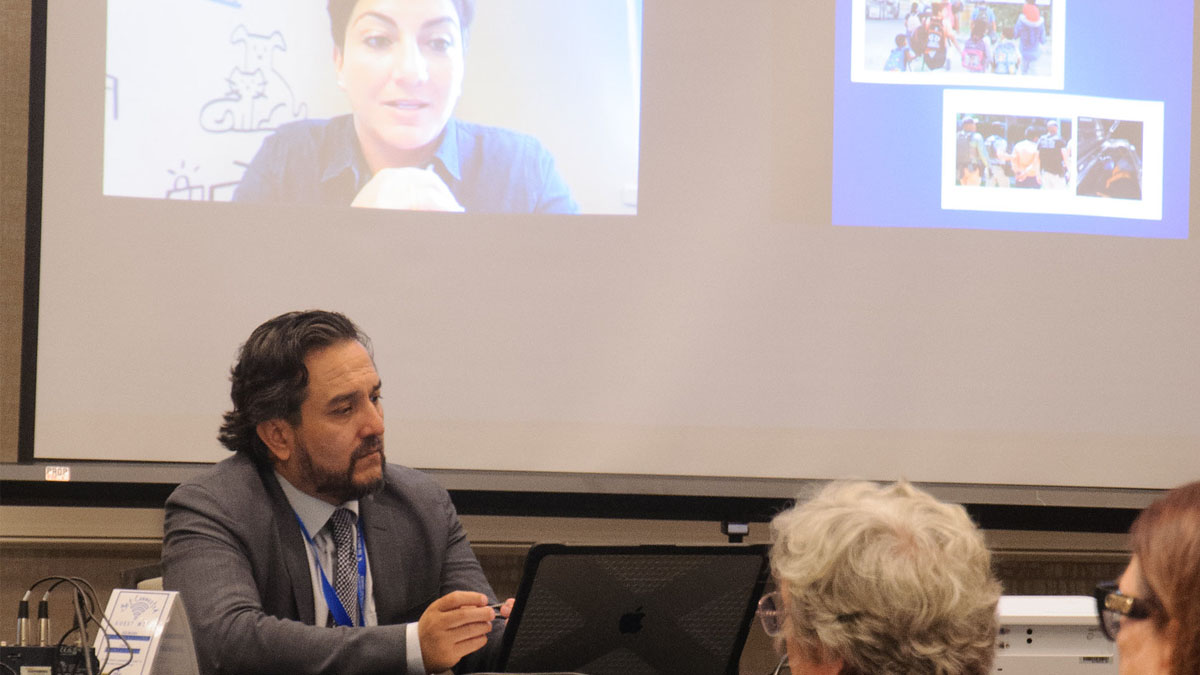
Angelica Acosta Garnett, an educator, and Doug Thie, an immigration lawyer with 14 years of experience, drew on their experience in community education, advocacy, and immigrant support to provide biblical frameworks and context on current immigration realities affecting our neighbors and communities.
Angelica started by inviting attendees to reflect on a question: “where do your views originate?” According to a 2022 Life Poll Survey, 20% of respondents identified the Bible as the source for their views on immigrants and immigration, while 80% identified the media.
To center the conversation, Angelica shared a quote from Rev. Dr. Daniel Groody, “the identity of the people of God is inextricably tied with the story of movement, risk, and hospitality.” Keeping the themes of movement, risk, and hospitality in mind, Angelica then explored examples of biblical frameworks that shape our work in discipleship and hospitality.
While emphasizing the importance of contextualization, Angelica noted that it’s also important to have a balance.
She explored stories from the Bible through the lens of migration, such as Abraham and Sarah, Joseph, Moses, Joshua, Ruth and Naomi, Daniel, and Jesus. Many migrated to neighboring countries seeking resources or protection, or were forced to do so. While looking at these stories, Angelica shared images of contemporary examples. Mothers separated from their children after sending them in the Rio Grande, in hopes of providing them with safety, food, and resources, similar to Moses’ mother placing him in a basket down the Nile River to escape the Pharaoh’s decree aimed at preventing a growing population.
Angelica and Doug then discussed common narratives and myths surrounding immigrants and immigration that can dehumanize individuals. Doug explained the various levels of lawful status, methods of immigration to the United States, common obstacles to admission, and the history of immigration reforms. He noted that many families wait anywhere from two to twenty years (plus) to receive immigration status.
At the conclusion of the lab, a time for questions and answers was offered to discuss additional information and resources to support participants in leading their communities in faithful, informed discipleship and hospitality.
Article written by Amanda Packer
Photo by Suzanne Cobb