Miles Baker Hunt, pastor in the NC Conference, recently attended the Global Ecumenical Theological Institute and Sixth World Conference on Faith and Order in Egypt. He shared insights with the Christian Unity and Interreligious Relationships Committee upon his return.
Reflections on The Fourth Global Ecumenical Theological Institute & The Sixth World Conference on Faith and Order
2025 marks significant anniversaries within ecumenical history, notably the 1700th anniversary of the first Ecumenical Council in Nicaea (325), a shared common date of Easter between the Eastern and Western churches, the 100th anniversary of the Universal Christian Conference on Life and Work (1925), and the 40th anniversary of the South African KAIROS Document (1985). At such important times in the life of the Church, the WCC’s Central Committee, on the recommendation of the Commission on Faith and Order, may elect to hold a World Conference on Faith and Order. As such, a World Conference was convened and the 6th World Conference on Faith and Order was the first to be held since 1993. The Conference gathered under the theme of “Where Now for Visible Unity?”
Alongside the World Conference on Faith and Order, a Global Ecumenical Theological Institute (GETI) was held. GETI 2025 brought together just over 60 emerging ecumenists and theologians at Saint Bishoy Monastery in Wadi El Natrun, Egypt at the invitation of His Holiness Pope Tawadros II, Pope of Alexandria and Patriarch of the See of St Mark of the Coptic Orthodox Church. It was a privilege to officially represent The United Methodist Church at the GETI, alongside two other United Methodist participants, (from Angola and Nigeria) and to subsequently be a part of the World Conference, where our denomination was officially represented by Dr David Field, Ecumenical Staff Officer for Faith & Order and Theological Dialogue.
Although the residential portion of GETI took place from October 12–29, the programme itself began in September with four weeks of intensive online seminars. These sessions offered opportunities to engage deeply with key ecumenical documents, the history of the Council of Nicaea, and Faith and Order processes, while also fostering relationships within our small groups. During the residential gathering, these groups met daily to reflect on the material and to participate in intercultural and ecumenical dialogue at a personal level. Each day during our residency centered on a particular theme confronting both the world and the Churches today, ranging from persecution and genocide to migration and pluralism. Every morning began with a time of common prayer, marking a daily moment of spiritual ecumenism. In the diversity of our traditions, we found unity in our shared worship of God.
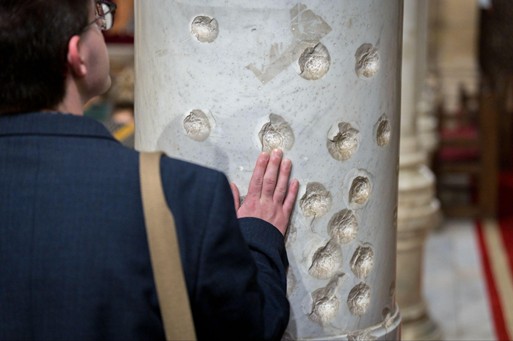
Within the GETI program, participants also took part in several study visits to significant sites connected to the local context. One such visit was to St. Mark’s Cathedral in Alexandria, where I found myself reflecting deeply on the reality of persecution in our world today. According to Church tradition, St. Mark the Evangelist first arrived in Alexandria, bringing with him the Gospel message of Jesus Christ. Yet his bold proclamation of Christ provoked the anger of those who resisted the Gospel. On the very streets where he preached, he was seized by a mob, bound with ropes, and dragged over the rough stones until his body was torn and broken.
Standing within the Cathedral that bears his name, I felt the weight of his witness alongside the witness of the martyrs who have followed in his path. This sacred site has not remained untouched by modern violence: on Palm Sunday in 2017, an Islamic State suicide bomber detonated an explosive in the Cathedral, killing himself and seventeen others, and wounding forty-eight. In that space, where ancient and contemporary witnesses have suffered for their faith, it became clear that persecution is not merely a story of the past, but a reality woven into the life of the Church today.
As we reflect on the legacy of Nicaea, we are reminded of the persecution of Christ himself. When we recite the creed, we confess that our Lord did not simply die, but was killed: “For our sake he was crucified under Pontius Pilate, he suffered death and was buried…” Yet persecution was never confined to the Christ-event. The ongoing persecution of Christians in Egypt and across the world bears witness to the persistent tension between the Gospel and the principalities and powers that resist it. And still, in the midst of danger and suffering, the faithful continue to gather to worship, embodying the enduring witness of Christ’s body in the world.
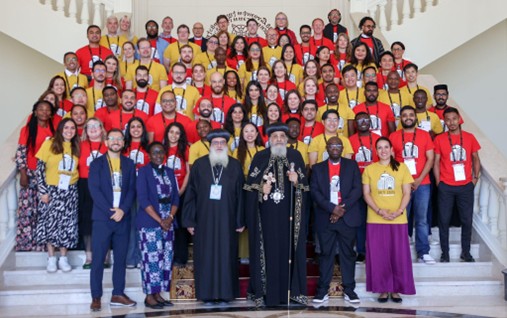
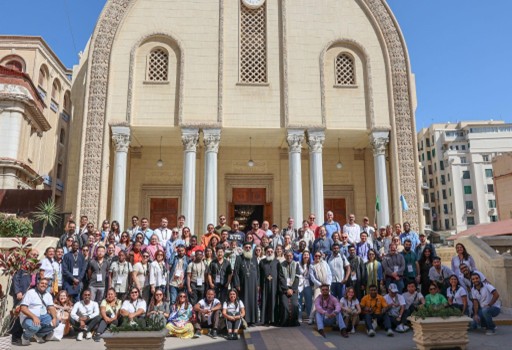
Through these experiences, one cannot help but to recognize that ecumenism cannot only be discussed, but is lived and embodied, an emphasis the GETI sought to highlight within the Faith and Order Conference. Toward the end of the first week, I was selected with several colleagues to serve on a drafting committee tasked with preparing a message from the GETI participants to the World Conference on Faith and Order. This was both a challenging and profoundly meaningful process. We were seven participants from across the globe, representing diverse traditions and theological perspectives and we were entrusted with giving voice to GETI’s collective witness. From these conversations emerged shared concerns and hopes centered on the global multi-crisis, solidarity, ecumenical reception, kenotic embodiment, and hope.
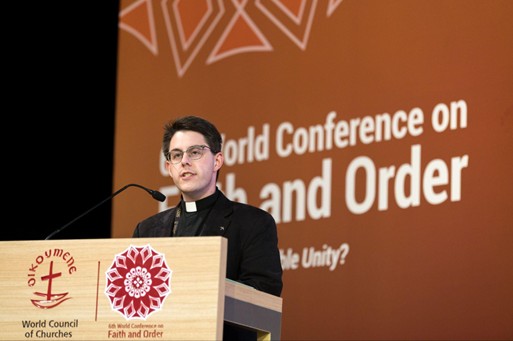
On the final day of the World Conference, I had the privilege of presenting the message alongside Ms Su San of the Rose of Sharon Lisu Baptist Church, Myanmar. We read the document in full and presented a copy of the document to the Rev. Prof. Dr Stephanie Dietrich, Moderator of the Commission on Faith and Order. The final document is representative of the many fruits of our collective theological reflections. Indeed, it is our shared hope this message will take its place in ecumenical history, as we continue the pilgrimage together, towards visible unity. One can read the document here: A Message from The World Council of Churches’ Fourth Global Ecumenical Theological Institute (GETI) 2025’ to the Sixth World Conference on Faith and Order at Wadi El Natrun, Egypt 15 September – 29 October 2025
The Global Ecumenical Theological Institute, held alongside the Sixth World Conference on Faith and Order, became a living testimony to ecumenism. Participating in a World Conference on Faith and Order was both a privilege and a rare opportunity to witness firsthand the breadth of the global ecumenical movement and to contribute to ongoing theological reflection. Equally significant were the relationships formed among participants, transcending geography, language, and confession. In these encounters, the hope of visible unity became tangible, indeed an ecumenism of friendship. The experiences at Wadi El Natrun reaffirmed unity is not achieved through uniformity, but through the patient work of listening, understanding, and shared witness. As we return to our respective contexts, we carry forward not only the theological insights gained but also the relationships and commitments which continually shape our shared ecumenical journey in the years ahead. In the face of the world’s multi-crisis, the task before the Churches remains urgent: to embody the self-emptying love of Christ with humility, to speak hope into suffering with prophetic courage, and to walk together as fellow pilgrims toward the unity for which Christ prayed. May it be so.
Rev Miles Baker Hunt
All Saints Day, 2025