New Faith Communities
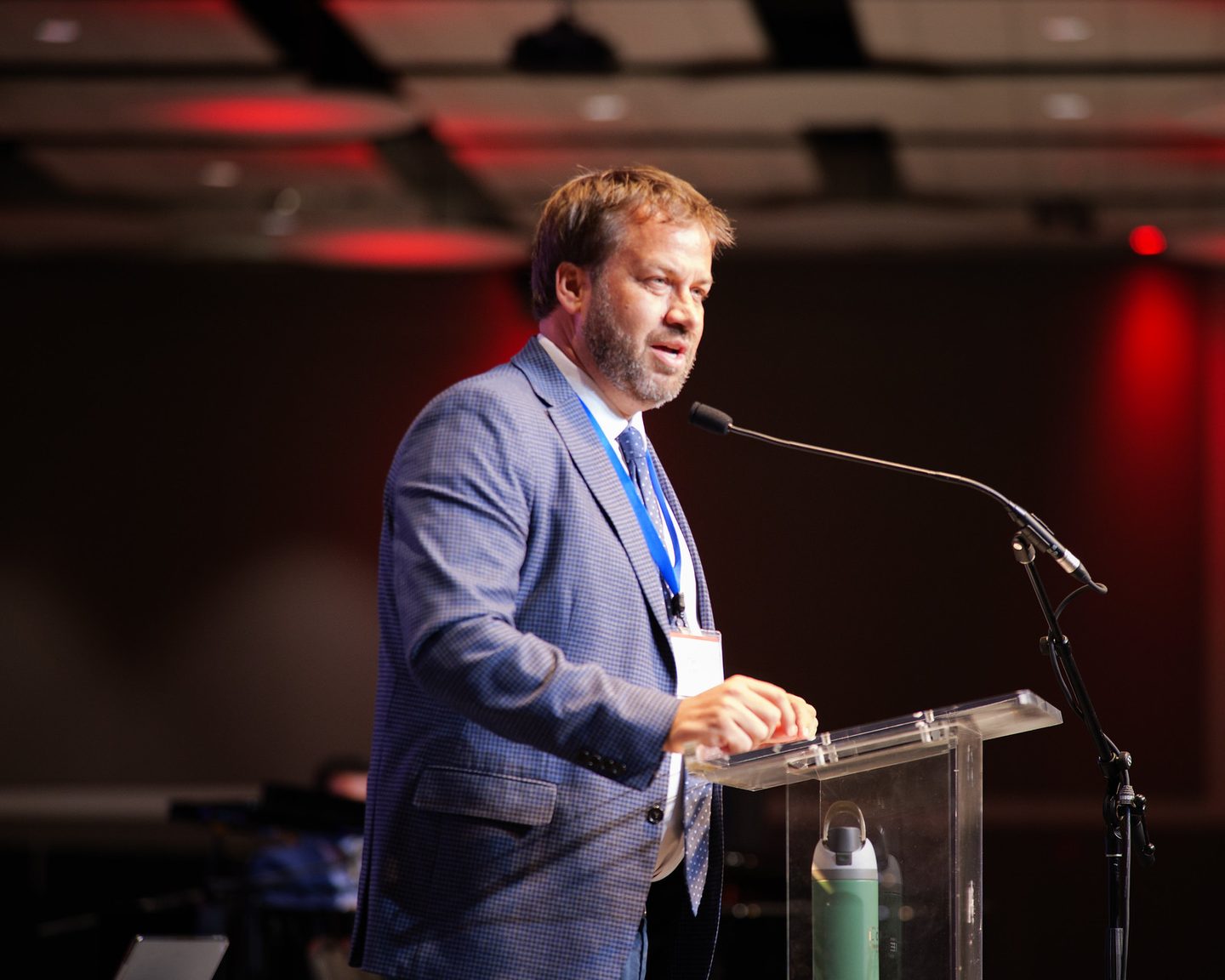
Rev. Dr. Tim Catlett, Executive Director of New Faith Communities, shared an inspiring update on the Office of New Faith Communities (NFC). The team’s steadfast mission is to help co-create new places for new people to gather in communion with Jesus Christ. Rev. Dr. Catlett offered a resounding “yes” to whether new people are still seeking church, noting that across Eastern North Carolina, people are actively searching for an authentic community and choosing to follow Jesus every day.
The NFC currently maintains 20 active partnerships tailored to regional needs, including:
- Addressing “UMC Deserts”: Establishing a presence in areas with minimal coverage.
- Revitalizing Existing Churches: Funding associate pastors, aiding transitions, and supporting renewals, like Elizabeth UMC in Johnston County, which recently celebrated its first baptisms in years.
- Planting New Communities: Supporting entirely new plants like The Grove UMC in Leland, which is building its launch team for public worship this fall.
- Facility Expansion: Helping outgrown ministries expand, such as Ware’s Chapel UMC and Grace UMC.
This vital work is sustained by a four-part funding structure: local church apportionments, a five-year grant from The Duke Endowment, invested proceeds from closed property sales, and the grassroots support of the $10 Club.
To keep this momentum going, you are invited to partner with the $10 Club. Through our shared generosity, we continue co-creating new places for new people to gather into communion with Jesus Christ.
Board of Higher Education & Campus Ministry
Rev. Heidi Reddy shared that the NC Conference Board of Higher Education & Ministry provides support and oversight for ten campus ministries serving students at 13 institutions of higher education. She noted that during the academic year, over 400 students were involved with campus ministries.
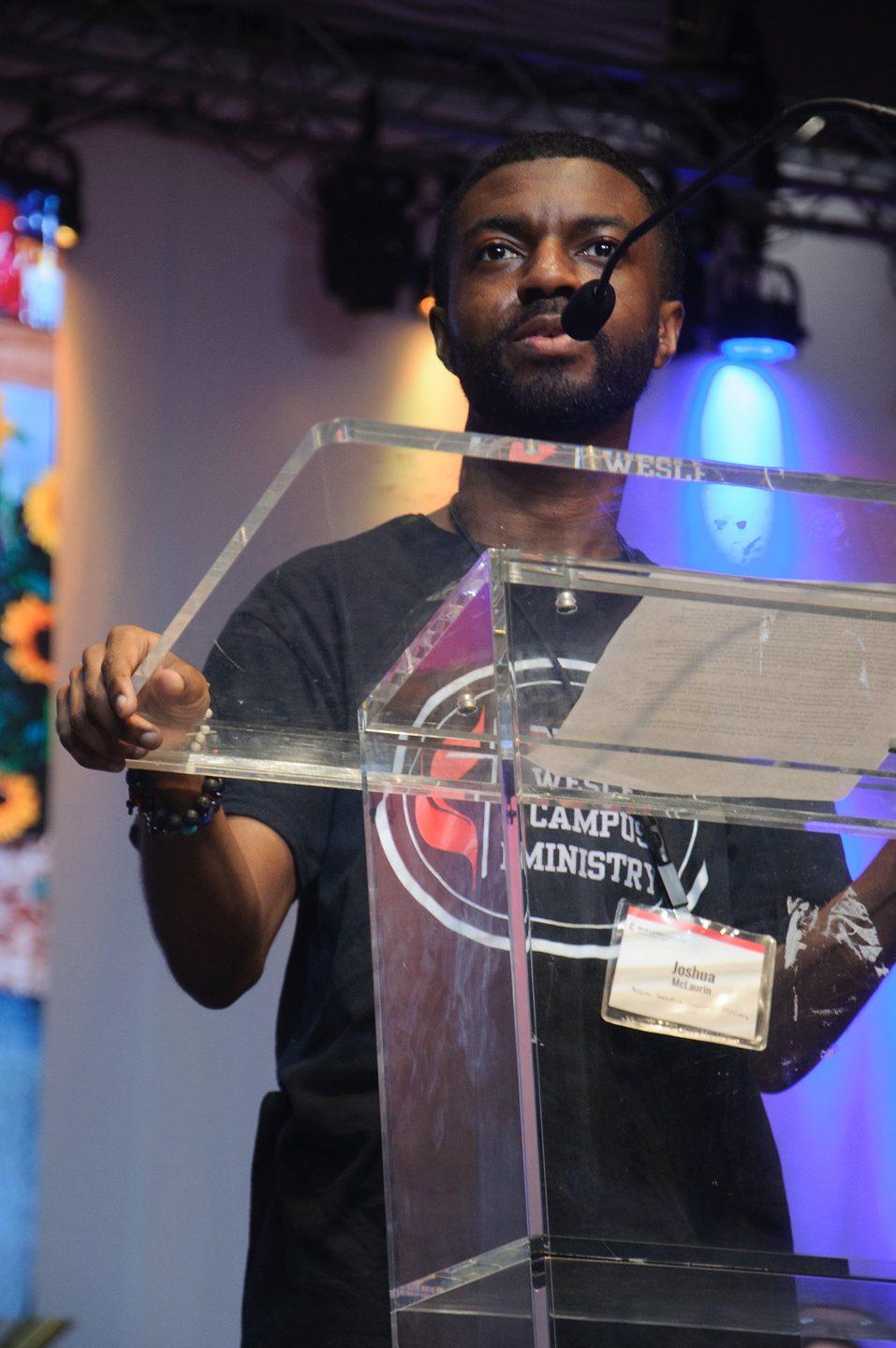
Joshua McLaurin, a recent alumnus of NCCU Wesley, a rising third-year student at Duke Divinity School, and a candidate for ministry, shared how his involvement in campus ministry has shaped his life and calling. Rev. Tyler Moore, Chair of the Board of Higher Education and Campus Ministry, asked all students in a campus ministry program who were present to join him at the front of the stage. He challenged the audience, “Every college student has a calling from God on their life. Please pour into them the love, support, and encouragement they need. Your investment in them today becomes the ministry they will carry into the world tomorrow.”
Rev. Moore noted that in 2027, the board will shift their funding model for campus ministry. Each ministry will be given greater authority to determine how best to use the funds it receives through apportioned giving. He shared, “It is our belief that local ministries are best positioned to make staffing and financial decisions.” Rev. Moore invited the body to use the QR code provided to submit names of college students in their congregations so that campus ministries could connect with them.
Rev. Moore also celebrated the new leadership at Louisburg College. A familiar face to many in the North Carolina Conference, Richard Campbell recently began his tenure as President.
Office of Clergy Life
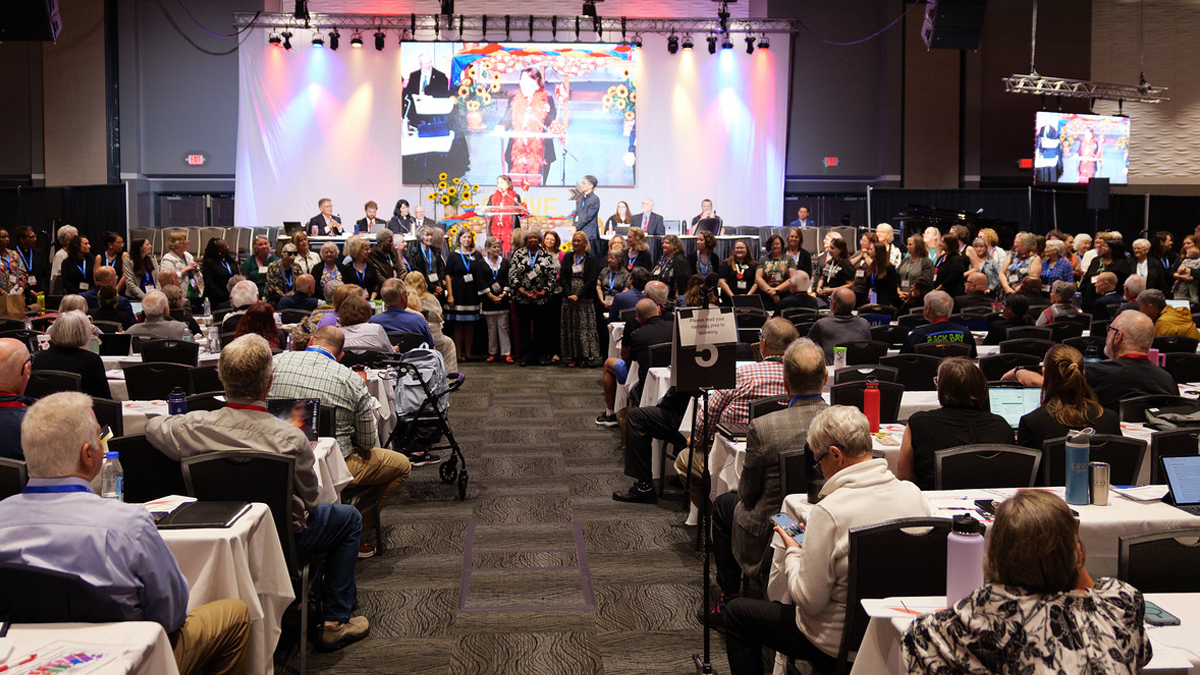
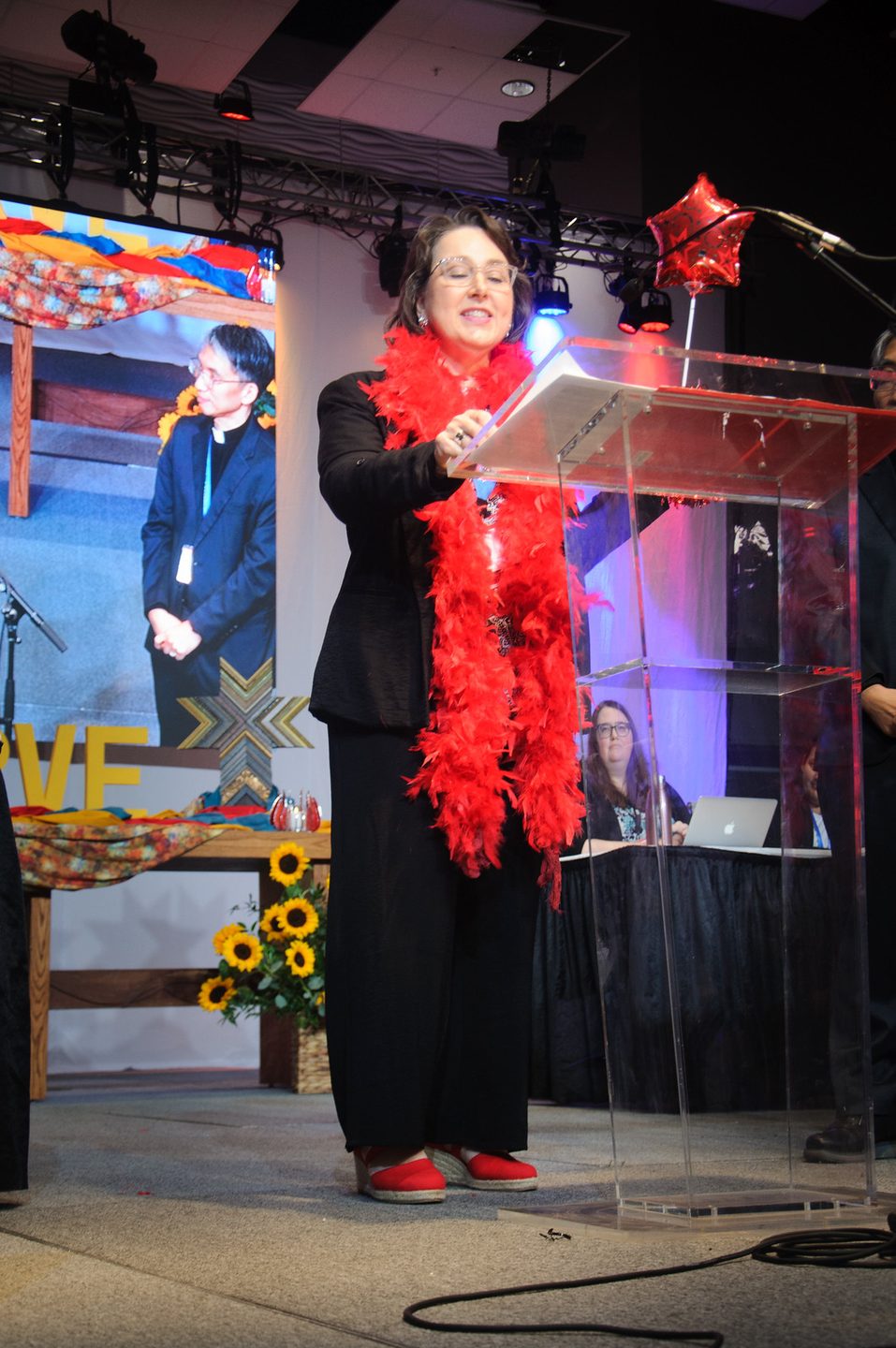
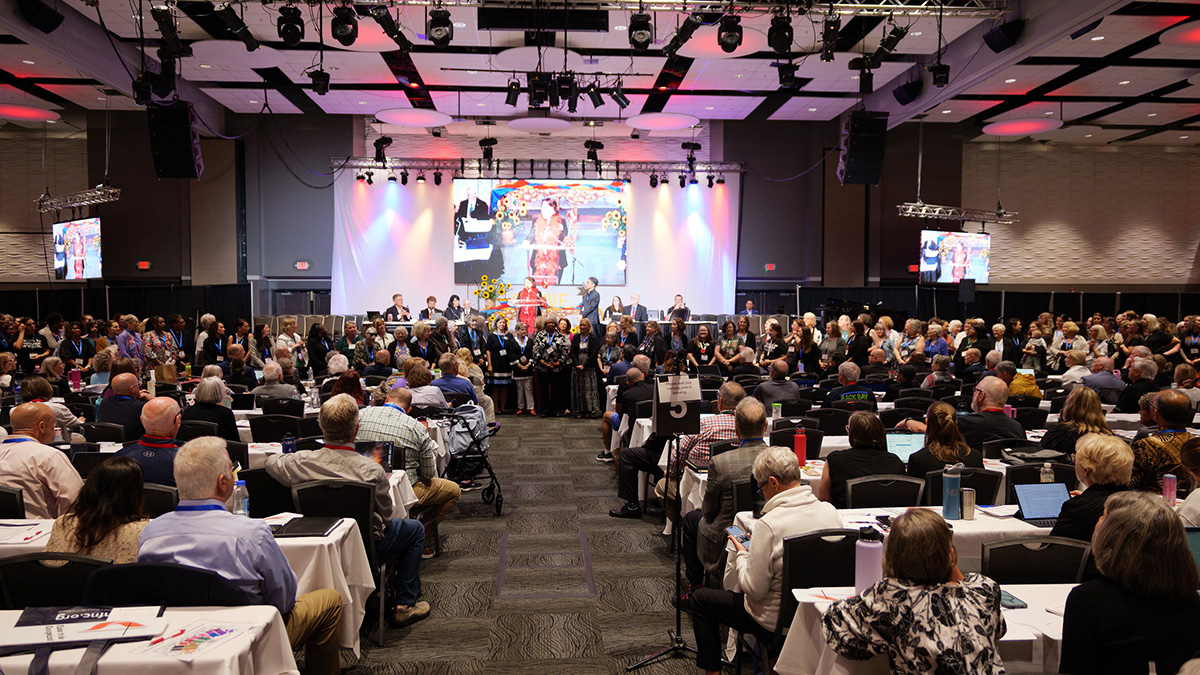
Sporting a bright red sparkly boa, fire red heels, and holding a sparkly red star wand, Rev. Beth Hood kicked off the Office of Clergy Life report with a celebration of 70 years of the ordination of women in The United Methodist Church. Rev. Hood asked all ordained women clergy to come to the front of the stage. These clergywomen framed the entire stage as Rev. Hood celebrated the fierce and faithful women of the clergy. She noted that in the North Carolina Conference, 43% of the clergy are women. A reminder of the work still to be done to ensure fair and equitable pay for female clergy closed out her report.
Board of Ordained Ministry Report
The Board of Ordained Ministry Report was presented by Dr. Sangwoo Kim. He noted the development of a task force to evaluate current practices, reminding all that the work would always be focused with justice and mercy. He celebrated ten ordinands, thirteen elders, and six retiring licensed local pastors. He celebrated the work of the Board of Ordained Ministry and valued the partnership with the Office of Clergy Life. Dr. Kim encouraged clergy to visit the Clergy Health Initiative at clergyhealth.duke.edu.
Duke University Divinity School Report
Rev. Dr. Edgardo Colón-Emeric presented the Duke University Divinity School Report. A video shared about the strong foundation for clergy at the seminary with over 1,000 years of experience on the Duke Divinity School faculty. The new centennial theme, “Our Calling to Fulfill,” was celebrated, as were the over 10,000 alumni serving in classrooms, prisons, and churches globally.
Report from the Connectional Table
Conference Lay Leader John Hall presented a report on the 2025 resolution, “A Call for Conference LGBTQ+ Ministry Team,” which was referred to the Conference Connectional Table and the Rules Committee. The resolution was brought to the Connectional Table for consideration after review showed that committees are not expressly named in the Conference Rules.
The Connectional Table met in November 2025 and discussed the resolution. The Connectional Table approved the proposal to create a formal committee, with its makeup to be determined by the Conference Nominations Committee, and a recommendation to the Council on Finance and Administration to add a budget line to the proposed budget.
The Conference Structure Review Committee reviewed the recommendation and discussed where the committee might be placed within the connectional structure. The committee was approved by the Structure Review Committee and the Connectional Table for inclusion on the Race Equity & Justice Ministries Team.
The Council on Finance and Administration approved $20,000 to be added to the 2028 budget for the Race Equity & Justice Team, contingent on approval of the report that adds the new committee to the structure of the annual conference.
Hall said the Council also expressed support for funding the committee through supplemental appropriations in the 2026 and 2027 budget years.
The Nominations Committee approved the initial committee members for the new committee, as shown in the nominations report in the Conference Workbook, contingent on approval.
Hall stated, “Full inclusion of our LGBTQ+ clergy and laity in the life and leadership of our Conference is critical. A committee focusing specifically on the needs, experiences, and gifts of our LGBTQ+ siblings will help bring us closer to our preferred future of a time when all persons are honored and valued as the image of God.”
Article written by Kim R. Smith & Amanda Packer
Photo by Suzanne Cobb & Chris Daniel