
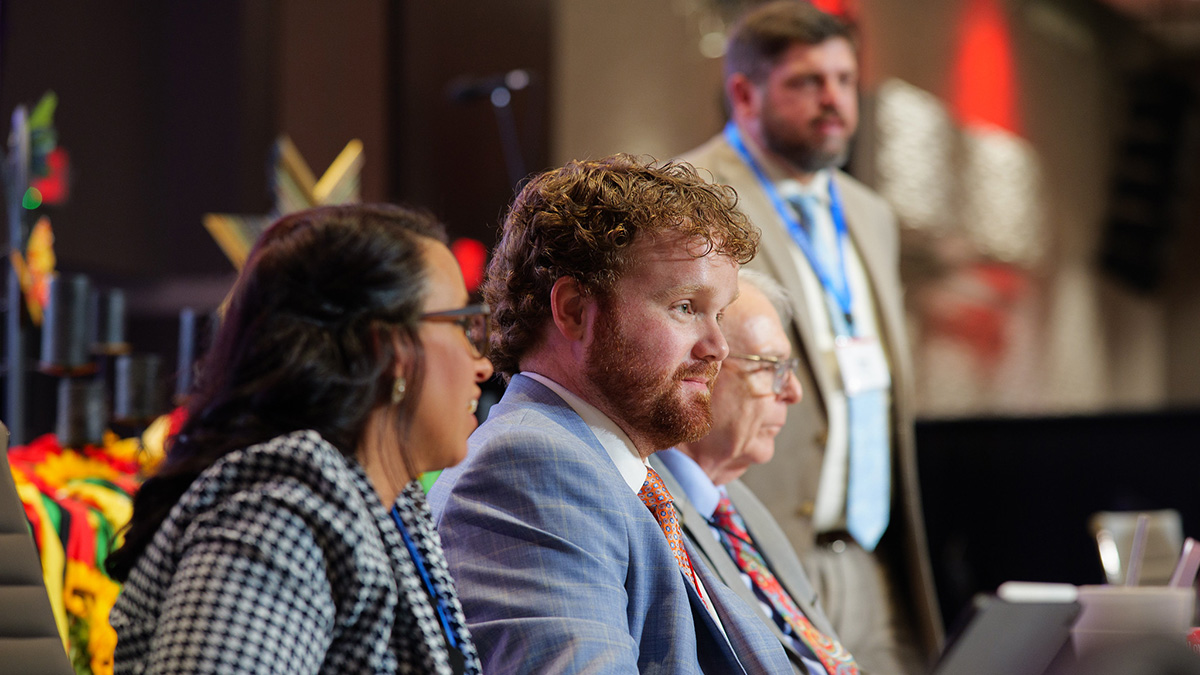
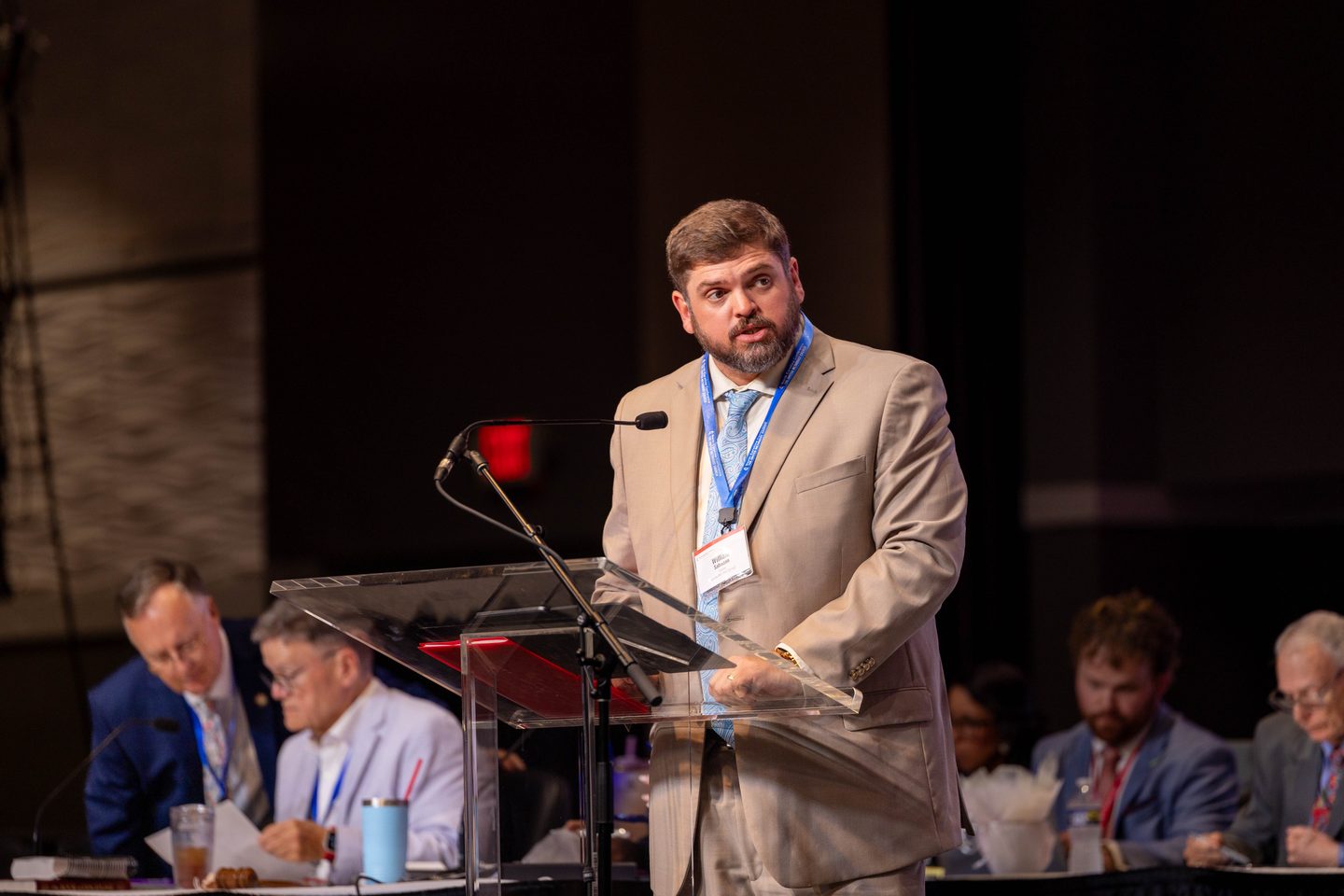
On Friday afternoon, the NC Annual Conference body continued its work addressing the 11 resolutions submitted for this session. Rev. William Sabiston, chair of the Resolutions Committee, reminded attendees that resolutions are an opportunity to articulate the conference’s stances on a variety of topics.
To begin this portion of the plenary session, Sabiston recommended the body address four of the resolutions together because the Resolutions Committee identified Resolutions VIII, V, III, and X as fitting “within the spirit of the Social Principles.” After a member indicated interest in speaking against one of the four resolutions, Conference Parliamentarian Lee Rodio and Robert’s Rules of Order were consulted. The four resolutions were consequently addressed separately so that they could be debated individually.
Resolution VII – Concerning Improving the Safety of Public US Schools condemns school violence and cites a number of statistics about the safety of NC schools and the need to protect children from harm. It calls for a minimum and maximum law enforcement presence within schools, with changes being made no later than 2035. With an amendment changing the language from “law enforcement officer” to “school resource officer,” the resolution passed and will be sent to several NC elected officials.
Resolution V – “I Was In Prison and You Visited Me” – Prison Ministry Initiatives and Justice notes the scriptural call to visit those in prison and the dedication of John Wesley, who visited prisons regularly and frequently. It also refers to the denomination’s Social Principles and urges the NC Conference to provide more information about prison ministry, to encourage churches to address the “cradle-to-prison” pipeline, and to provide “safe places for those transitioning out of prisons” as they re-enter society. The Conference Resolutions Committee noted that this resolution was in keeping with the Social Principles and recommended adoption.
Resolution author, Rev. Austin Meadows, spoke in favor of the resolution, saying that God is “calling us to go now and be present where Christ is present,” because the people in prison “are not statistics, they are children of God.” An editorial comment was made correcting the grammar of the resolution, and an amendment adding a final “Be it further resolved” section was proposed and approved. This final section states that an “annual report be offered by prison chaplains that would detail efforts by NC Conference churches to partner with prisons” and to share information and celebrations about baptisms and other work being done by chaplains and churches. The resolution passed as amended.
Resolution – III Call for Climate Change Adaptation emphasizes that God’s creation is “in peril” and that “caring for Creation requires us to address both the causes of climate change and the impacts of climate change.” The text of the resolution, written by the NC Conference Creation Care Committee, outlines a number of impacts to the state and overall impacts to issues including rising temperatures, droughts and wildfires, rising sea levels, increased strain for the socioeconomically disadvantaged, and the increasing risk to human lives. The Resolutions recommended adoption of the resolution.
Rev. Thomas Gibbons, representing the Creation Care Committee, encouraged attendees to include climate change as a consideration in approving church activities, to explore ways to reduce the vulnerability of churches to climate changes, and to use church resources to help communities become more resilient. He suggested churches can open their air conditioned spaces during days with high heat, deliver water, and conduct door-to-door checks. Gibson also mentioned that the committee would be offering workshops in the coming months. This resolution was approved.

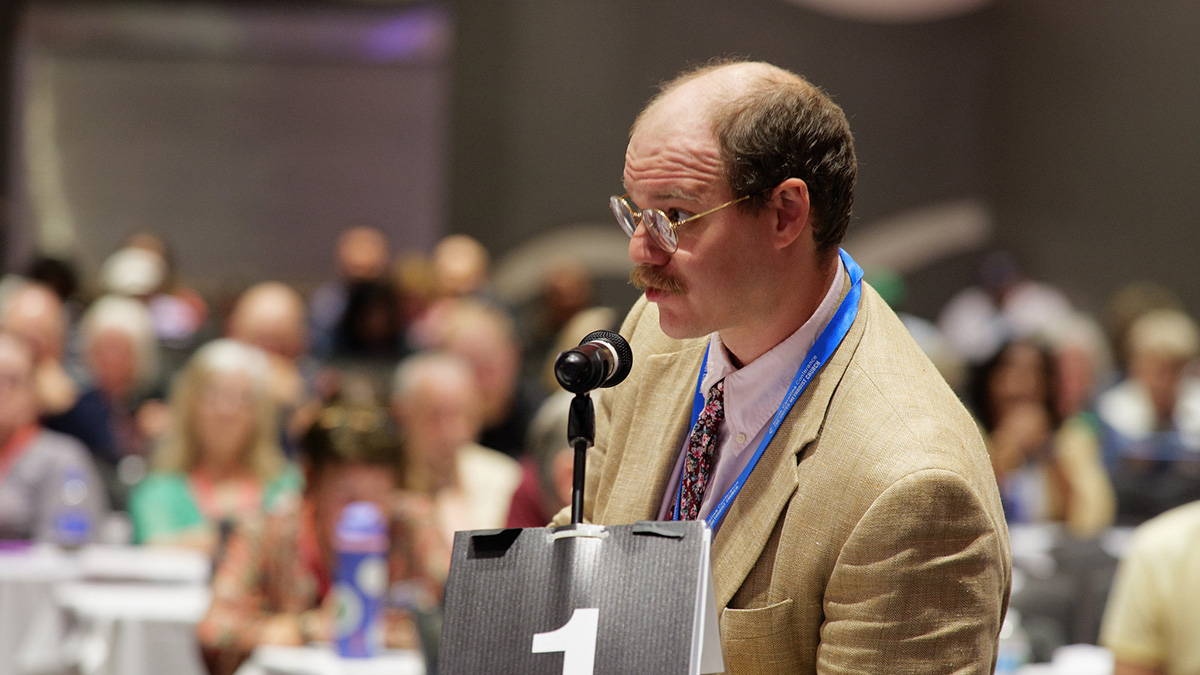
Resolution X – Concerning the Military Seizure of Greenland notes that Jesus said, “Blessed are the peacemakers” and that the current Book of Discipline rejects “the use of war as an instrument for foreign policy.” The Resolutions Committee felt it was in keeping with the spirit of the Social Principles and recommended adoption.
First approved by the NC Conference Youth at their Annual Conference Session in the summer of 2025, the author, Will Madison, noted that the political landscape had changed. However, he felt the resolution could “still be effective even though the main goal had already been accomplished. The [Trump] administration is still seeking an arrangement that would unfairly dilute Denmark’s ability to control their territory and would set a foundation for future American expansion on the island.” The resolution calls for the American government to “end any consideration of military action against Denmark and instead seek peaceful solutions.” The resolution was approved.
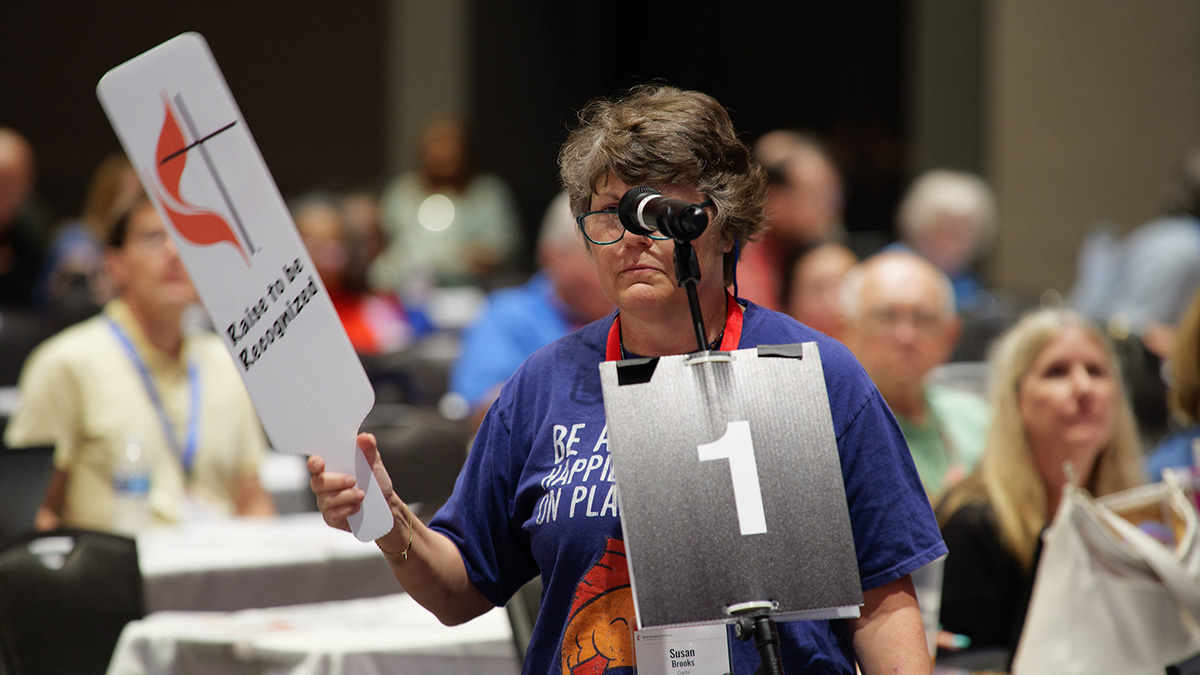
Resolution VI – Loving Our Neighbors Through Wearing Masks and Improving Air Quality addresses the long-term impacts of the COVID pandemic and long COVID. It calls on churches to provide respirator masks and encourage congregation members to wear them at indoor events. It also calls for churches to check ventilation systems and add air purifiers to their gathering spaces. Sabiston noted that the Resolutions Committee, “affirms and promotes each person’s practice of safe health measures” but did not recommend the adoption of the resolution. Speaking for the resolution, its author, Rev. Julie Poston, cited reports showing that even partial masking following the pandemic helped reduce flu deaths. She asked those gathered, “Imagine if we demanded clean air like we demand clean water.” She said that masking was “too easy of a tool” not to use. “I thought that we were the people who cared about lives, who saw the sacred worth of all lives, who didn’t think that any preventable deaths were acceptable.” After a brief debate, the resolution was not adopted.
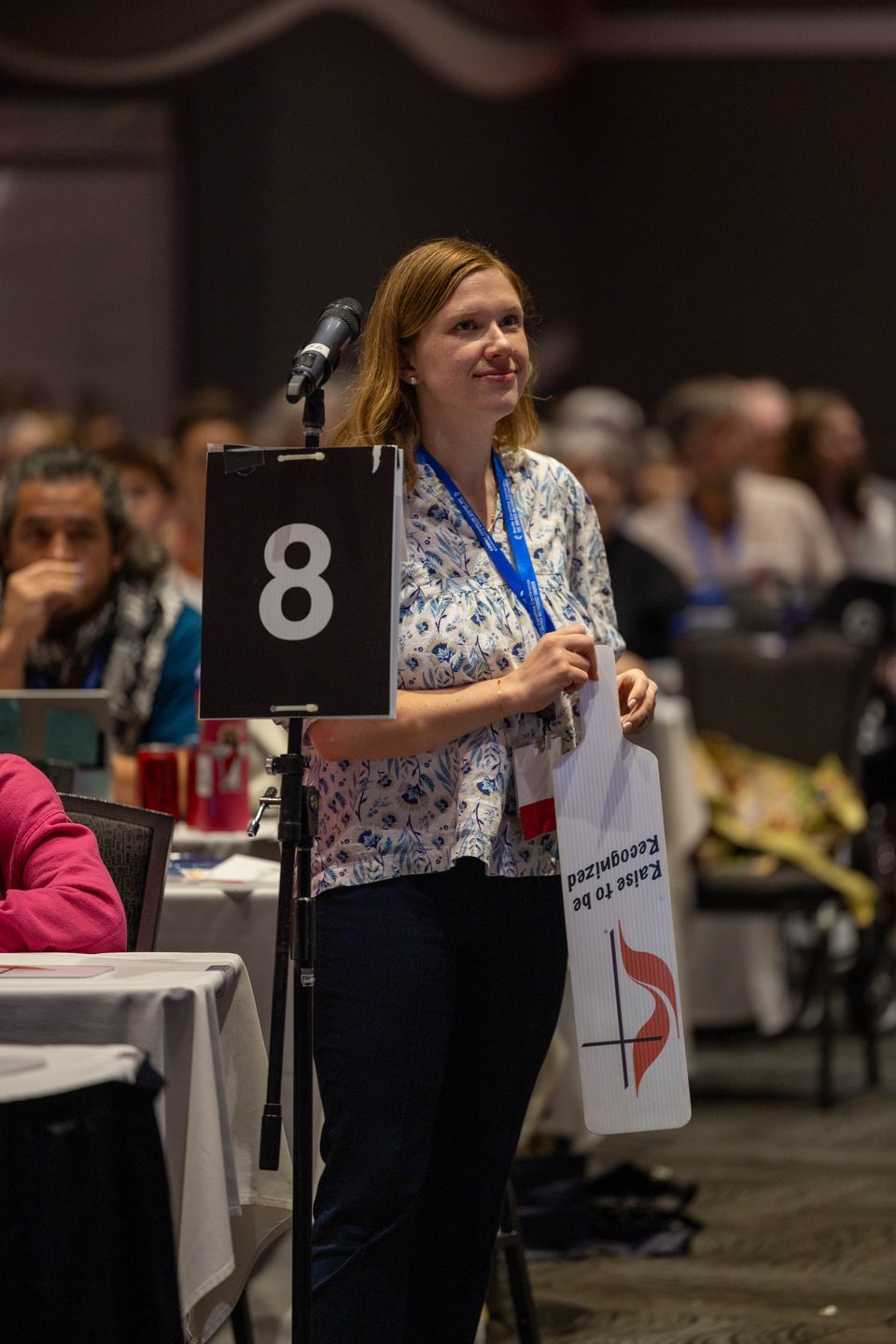
Resolution IV – Urging Churches/Congregants to Minimize Generative AI Use and Call for Limitations on Unsustainable Data Centers was the next resolution presented. This resolution addresses the harm caused by AI data centers, to the environment, to local communities – especially those in rural and impoverished areas. It also calls for churches to stop using generative AI. The Resolutions Committee agreed with the aim of the resolution but did not recommend its adoption.
The resolution author, Hailey Reid, noted that the NC Conference Creation Care Committee was in favor of the resolution and asked the body to “take a step and try to be better stewards of creation.” She cited the impact data centers have on water, electrical, and land use and raised the concern that data centers disproportionately impact rural areas and marginalized people. An amendment was passed striking lines 171-174 of the resolution and replacing it with wording calling for churches to “adopt conscientious, ethical, transparent, and responsible use of AI.” With a speaker bringing the recommendation that the resolution be split into the two topics of data centers and use of AI, the body ultimately voted to refer the amended resolution to the Creation Care Committee.
Resolution IX – Concerning Access to Licensed Mental Health Counselors for Youth and Local Churches was the final resolution brought before the body. The Resolutions Committee recommended that it be referred to the NC Conference Health Ministry Committee for them to bring a report to Annual Conference 2027. This recommendation for referral was approved.
Article written by Julie Sutton
Photo by Chris Daniel, Becca Detterman