

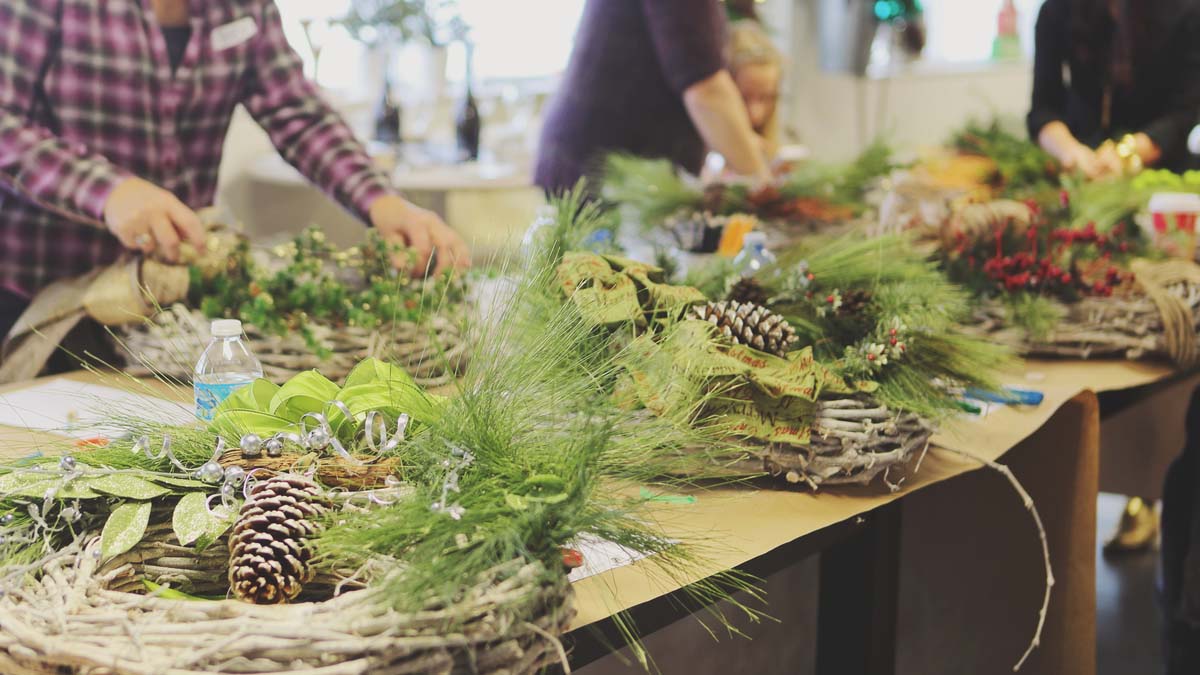
We will soon take great care in preparing our sanctuaries to celebrate the birth of Christ through the annual Hanging of the Greens. For many, this reverent ceremony is one of peace, hope, and joy, and it marks the real beginning of the season – one that is not yet harried by Christmas lists, decorating, or the side-eye of an elf you might prefer to permanently shelve.
These living evergreen trees, branches, and berries, through scent and color, invite us once again to prepare for a season of waiting for, and then celebrating, the birth of Christ. Later, as the end of Epiphany nears, the leaves and needles of these evergreens, having been cut from their source, will begin to dry, curl, and turn brown. They may, having fulfilled their holy duty and, possibly quite unceremoniously, be removed from the sanctuary and tossed into the dumpster bound for the county landfill.
But what if we brought the Hanging of the Greens practice full circle? What if, instead of sending these symbols of Christ’s eternal life and love to the landfill to be entombed for the rest of time, they became living soil to nourish and replenish future trees, gardens, and plants? Or they continued to protect creation by aiding in the prevention of erosion on our beaches or streams? Or provided habitat for animals in a forested area or fish in a nearby lake? Or were chopped into mulch to protect the soil below?
I encourage you, whether clergy or lay, to ask around… find out what happens to these sacred props once they have ushered us through the season. If they are indeed landfill-bound, why not make an effort to change their trajectory? These trees, wreaths, and greens, which play such a meaningful role in preparing our hearts and minds for the Advent season, are, like us, meant for eternal life.
Curious how you can put this into action? I’ll share what we do at my church:
- The first critical step is communicating your intention to the powers that be and finding when the un-decorating will happen. For me, that is the church secretary. (This person’s actual title is much more encompassing, but for the purposes of this writing, it conveys the message.)
- Next is determining a place to take the greens. This might be a yard-waste drop, a wooded area on church property, a garden, program, or person that accepts trees for erosion prevention, or so on. (Ours is carried to our town yard waste drop where it is turned into mulch.)
- Equally important is ensuring that someone with a truck is available to carry the items away within a reasonable amount of time, preferably before trash pickup day. Just ask around.
- If our team (which some years has consisted of one very committed man) is not available on the day of the takedown, they are placed in an agreed-upon location, which, for us, is an alley near the recycle and landfill carts.
- With leather work gloves (and sometimes the aid of pliers), we pull the pine boughs out of their metal wreath rings and toss them on a tarp or in a large cardboard box. This is quicker and easier than it sounds.
- The metal wreath rings all go into a pile to be dropped in scrap metal recycling. (Some years these have been given to a local individual who collects scrap metal to sell to the recycling agency.)
- Trees can be carried off whole or cut down with a handsaw to make them more manageable.
- Any non-compostable/recyclable bows/decor are either saved to be donated if nice enough for reuse, or landfilled. (Tinsel and other non-compostables should not be left on the tree.)
- That’s it! We feel good knowing that this year’s Advent wreaths and trees will become living soil as intended and designed by our Creator God.
Article written by Leigh Williams, Member of First UMC, Cary.