
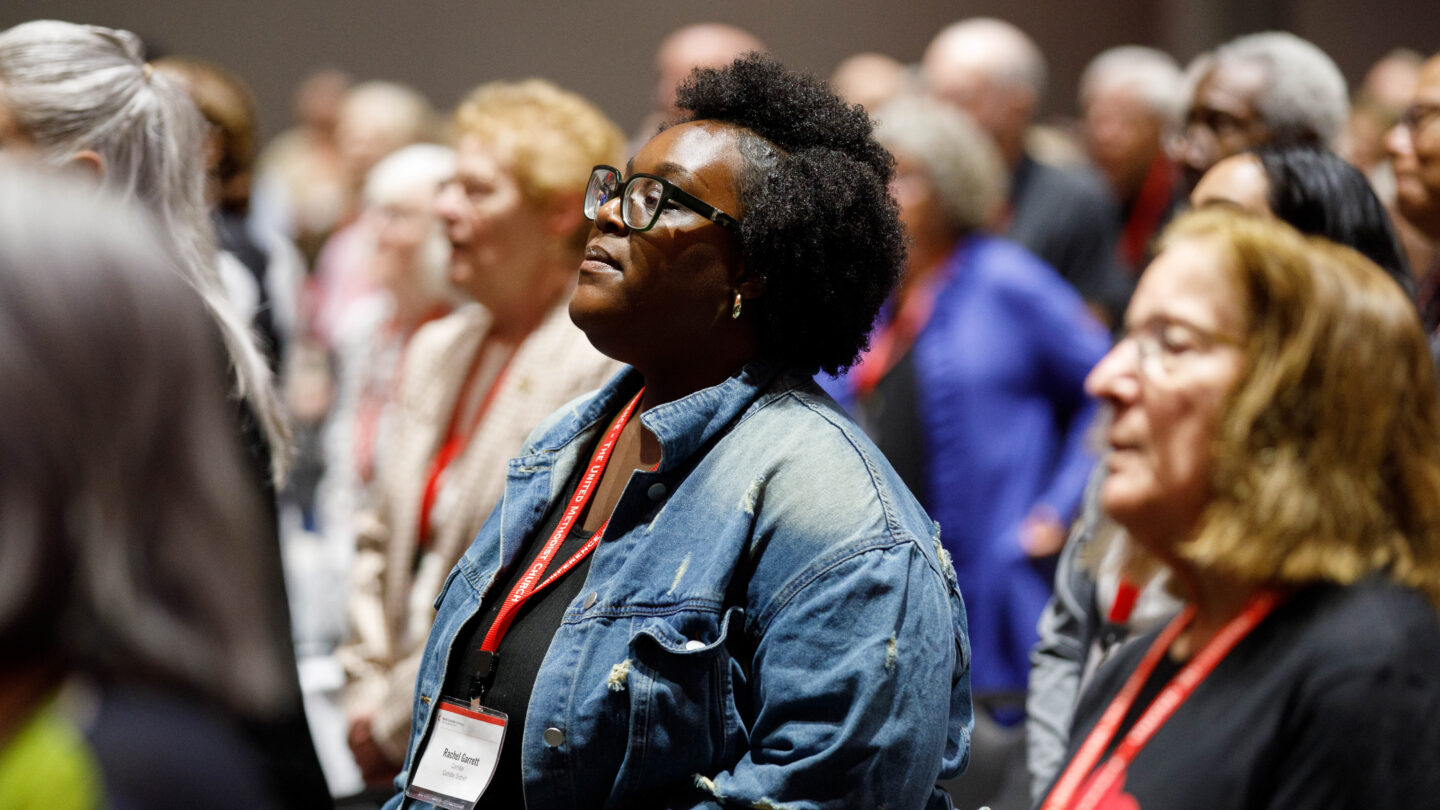
The Laity Executive Session on Thursday morning began with inspiring music led by Jay Locklear, including the singing of two songs, “Covenant Prayer” and “New Wine.” Youth leaders shared scripture, a devotion, and a prayer centered on the Annual Conference theme: Love Boldly, reminding laity to cast out all fear. The youth offering a devotion reminded those gathered that Jesus didn’t talk about love; he embodied it, and she encouraged vulnerability, sacrifice, and bold love, which moves toward others and is rooted in God’s unfailing love.
Welcome and Business Updates
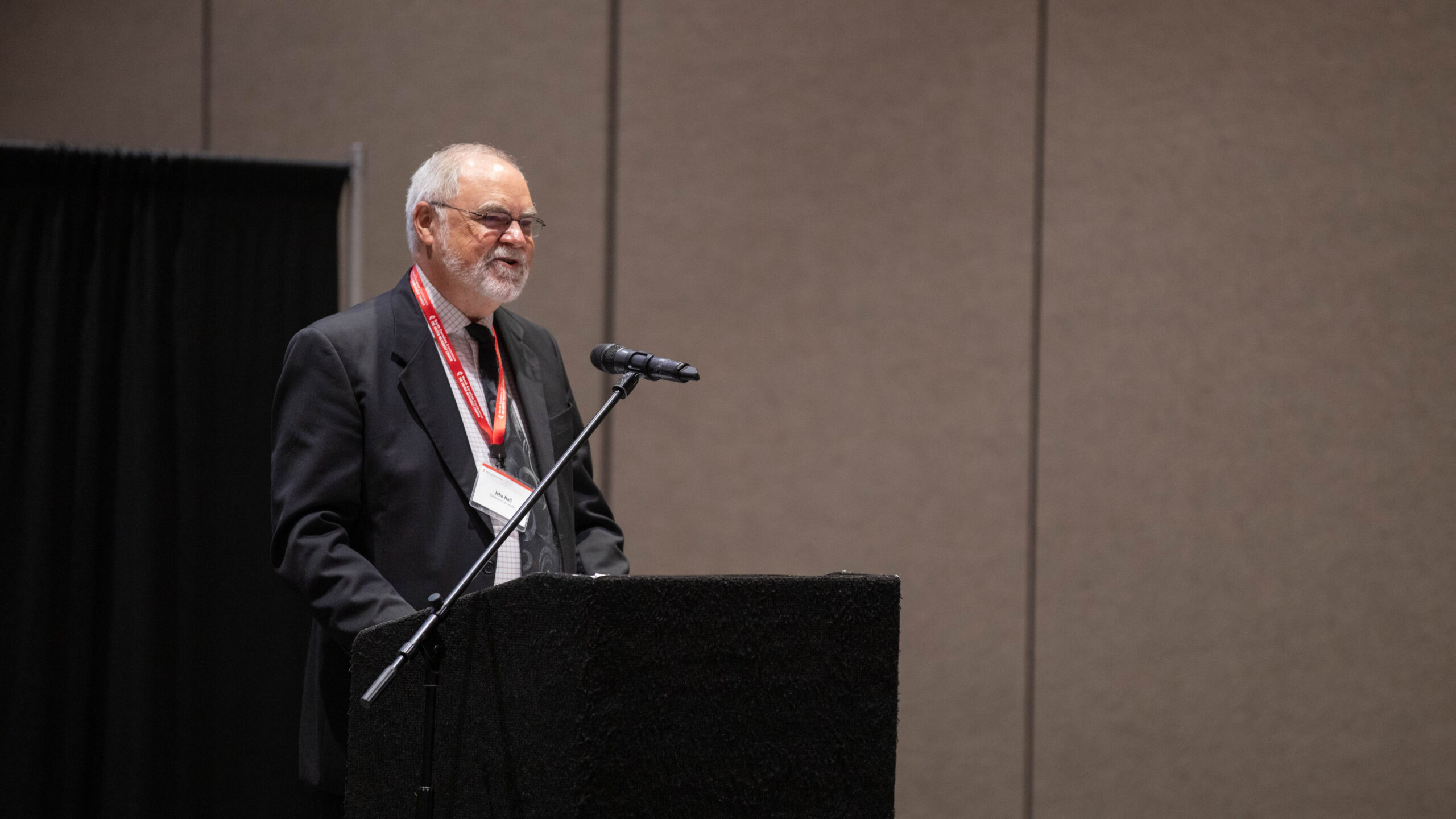
Conference Lay Leader John Hall welcomed the laity to Annual Conference, celebrated the ministry of the laity, and expressed his gratitude for the collection of UMCOR Menstrual Hygiene Kits put together by churches across our conference. He emphasized how God’s work is greater when churches collaborate.
Dr. Christine Dodson, Conference Treasurer/Business Manager, oriented the laity to the Annual Conference by giving an overview of the logistics and highlighting important information in the workbook. She announced our new Parliamentarian, Lee Rodio, and shared the process for voting on the constitutional amendments, and overall parliamentary procedure. Dodson emphasized the importance of participants sharing their voices as she explained the process of raising a paddle to be recognized by the Bishop and addressing the body to engage, ask questions, and participate in discussions.
Stories from the Conference and Beyond
A member of the Council on Youth Ministry, then came forward to share her story about how a man overheard her praying before a meal with other youth at a local Mexican restaurant. Later, the man shared his appreciation for her prayer. She reflected on how this one simple prayer made an impact, not only on the man at a nearby table, but on the youth she was eating with. His comments sparked a conversation about God and church. “We need to live out our values – we never know who is watching, what seeds can be planted.” She closed with a challenge: “Don’t limit where you expect to find God.”
Fresh Expressions with Rev. Dr. Michael Adam Beck
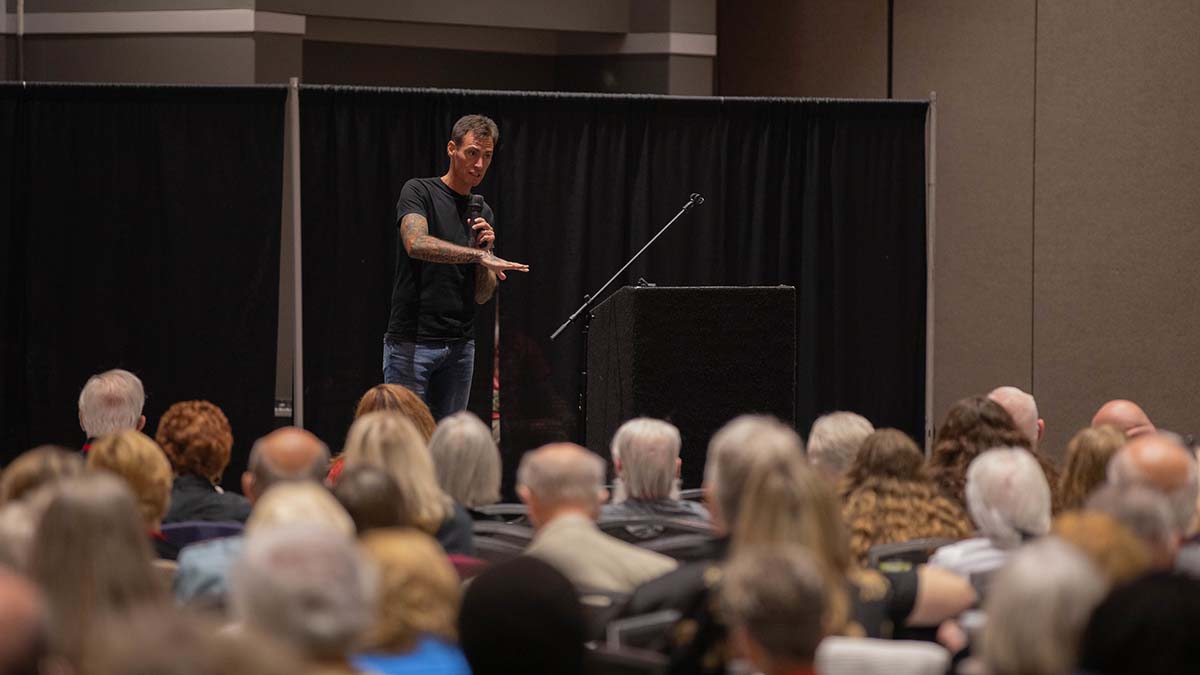
Kim Smith, Sound District Lay Leader, introduced the featured speaker, Rev. Dr. Michael Adam Beck, an author, professor, and pastor who spoke about the Fresh Expressions ministry. Fresh Expressions is a movement defined on the NCC New Faith Communities website as “a form of church for our changing culture, established primarily for the benefit of those who are not yet part of any church.”
Beck offered three questions designed to help churches explore and brainstorm new ways to reach people:
- What do you do every week?
- Where do you go to do that every week?
- Who do you do that with?
Beck advised that answering these questions can point toward new places and options for bringing the Good News into the world. Beck, referring several times to the story of God’s presence in a local restaurant, offered several examples of Fresh Expressions efforts he is involved with, emphasizing that some of these were not successful, and recognizing that that is OK. He also emphasized that every lay person is ordained in the waters of their baptism to be priests in the priesthood of all believers – not needing a Rev. or Dr. in front of their name in order to bring faith into their everyday life.
One example Beck shared is Paws for Praise, which meets in a local dog park. Larry, a 70-year-old, felt led to reach out in a new way. Answering the question “Where do you go every week?”, Larry now leads a simple gathering in a dog park with passing of the peace, a short Jesus story, and questions like, “If God were a dog, what kind of dog would God be?” This has created a community that regularly prays together and explores their faith together.
Citing statistics about church attendance and ways to reach new people, Beck defined four options for the church to reach those who do not attend church. Some of these options — such as “pray and wait”, “attractional”, and “engaged” — are methods which previous generations of church goers could rely on, especially when Blue Laws meant that everyone was essentially expected to attend church on Sunday mornings. But now, acknowledging there are so many ways people stay busy and are pulled away from a weekly rhythm of church, Beck explained that new tools are needed and encouraged churches to adopt a “both/and” mindset of using existing and new tools.
Drawing on Wesleyan roots, he reminded those gathered that Wesley said, “The world is my parish,” and challenged churches to find what he called “incarnational” methods of being the church out in the world. This challenge rooted in no expectation of people ever coming to the physical church building – in the way of Jesus and John Wesley. Incarnational methods mean being with people where they live without expectation that they will come to the building of a church. Beck named Susanna Wesley, mother of the founder of Methodism, John Wesley, as starting the first Fresh Expression in her kitchen in the 1700’s. Although she was a woman and not ordained, she held church for around 200 people in her home despite her husband’s disapproval and potential repercussions.
Beck pointed out that churches having “all our eggs in one Sunday morning basket” created a gulf between the church and people in the community. Citing statistics on the rise in loneliness and decline in people considering themselves connected to a particular denomination, he encouraged churches to focus on Fresh Expressions, fostering first a sense of belonging and being known, stating that, “believing comes at the pace of Grace.”
He said Fresh Expressions thrive in places where “people do normal life” and shared other examples, including a weekly family table church to feed and engage with families who also receive support through the food pantry. This ministry was a next step to do more than address food insecurity. Another experiment is called “Eat Pray Play” which engages families who need child/youth care so adults in the household can attend recovery meetings and brings everyone together after those meetings for casual worship time.
Beck also described a “Burritos and Bibles” effort that uses tortillas for communion as participants share a meal in a Mexican restaurant while they share their faith journeys. Other Fresh Expressions locations included a tattoo parlor, a car charging station, and an area retirement community. He also explained the “blended economy” that allows these efforts to continue – the congregation voted to approve converting church space into housing for men who are in recovery, converting the pastor’s office into a substance abuse counseling space, and converting the parsonage into next-step housing for men who are sober. These efforts are funded through grants and fundraising.
To learn more about the Fresh Expressions movement, join Beck’s Passional Church Substack and visit the NC Conference Fresh Expressions website.