
During the Saturday plenary, members of Annual Conference took up four proposed resolutions. Three resolutions were proposed before the deadline and included in the Conference Workbook. The body voted to suspend conference rules on Friday after lunch to receive an additional proposed resolution.
Note: The Resolutions were taken up on Saturday morning in the following order:
- Resolution 1: Concerning the presentation of a mock resolution at Annual Conference (Workbook page 106)
- Resolution from the floor: For the NCCUMC and its congregations to take a more public stand in support of immigrants and refugees (Link to PDF)
- Resolution 2: A call for a conference LGBTQ+ ministry team (Workbook pages 107-8)
- Resolution 3: Opposition to abortion beyond 12 weeks post fertilization (Workbook pages 109-10)
Resolution 1: Concerning the presentation of a mock resolution at Annual Conference
Resolution 1 was submitted by the youth of the NC Conference and encourages the Annual Conference to adopt a practice of presenting a mock resolution at the first plenary session of each Annual Conference meeting as a way to assist those gathered in understanding Robert’s Rules of Order, how to speak for or against a resolution, proposing an amendment, and other key elements to parliamentary process. The youth legislative session has begun the practice of presenting a mock resolution accompanied by explanatory narration and noted it “has been received with overwhelmingly positive feedback.”
The Resolutions Committee recommended adoption of this resolution, and the conference youth president, Matthew Wong, shared with the body that including the mock resolution as part of the Annual Conference Session for Youth has helped build confidence and efficiency, increases participation and inclusivity, and also offers a lighthearted moment. The resolution was approved.
Resolution from the Floor: For the NCCUMC and its congregations to take a more public stand in support of immigrants and refugees
This resolution was submitted during Friday’s plenary session after the body voted to suspend conference rules in order to receive the resolution. The Standing Rules of Order require resolutions to be submitted 30 days prior to allow time for review by several committees and at least a day prior to allow the body time to review (Conference Workbook, page 19, Standing Rules of Order, section I, paragraphs B.3 and B.5). This resolution was proposed by the NCC Hispanic/Latino Committee and a number of individual signatories. It calls for the Annual Conference to reaffirm “our commitment to standing in solidarity with immigrants and refugees” in a number of ways including submitting an “opinion article for the News and Observer” newspaper, organizing “peaceful and public witness” at the conference, district, and congregational levels, encouraging submissions to local newspapers, and letters being written to local and regional officials “asking them not to cooperate with ICE” (Immigration and Customs Enforcement). The resolution also encourages support of the Samaritan’s Fund (NC Conference Advance S-00298) and anticipates requesting supplemental funding for the Samaritan’s Fund from the Council on Finance and Administration to assist pastors and congregations in this work.
The Resolutions Committee met via email to evaluate the resolution and recommended adoption of this resolution, noting that it “set the direction for the work” and was “not binding but aspirational.”
An amendment to the resolution was proposed by Rev. Edgar DeJesus, adding an additional “be it resolved” statement. The amendment to the resolution was adopted and placed following paragraph 10 as follows:
Be it further resolved that this annual conference stands in solidarity with the Council of Bishops, UMCOR, and other General Agencies of The United Methodist Church which have received official letters of investigation from the federal government.
During the debate, Rev. Wes Neal, one of the resolution’s signatories, noted that the resolution arose in part from a request by churches in the Corridor District to “not be alone” in support of their neighbors. Following the passing of the added amendment, the entire resolution was adopted.
Resolution 2: A call for a conference LGBTQ+ ministry team
Resolution 2 was submitted by the LGBTQ+ Pastoral Care Task Force and a number of individual signatories. It proposes a conference-level ministry team to support lay and clergy LGBTQ+ persons with “community-building, faith and leadership development, solidarity, and advocacy.” The resolution also calls for the amplification of “voices and experiences of the LGBTQ+ community, especially those who have been marginalized,” the inclusion of the new team “in all future annual conference committees and policies,” the development of “resources to equip local churches,” and special emphasis on age-level ministries to care for LGBTQ+ persons of all ages. The resolution also defines the team’s membership.
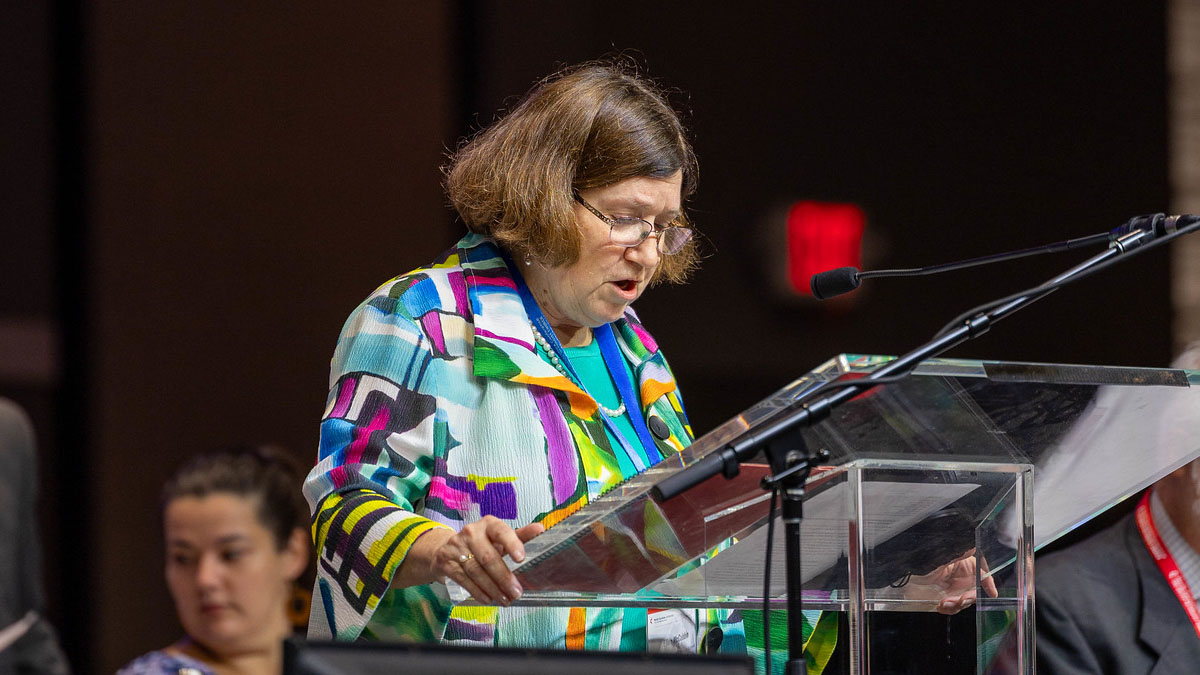
Chairperson Rev. Ellen McCubbin noted that the Resolutions Committee recommended referral of this resolution, due to “concerns about implementation” while maintaining that the “committee was fully committed to representation [and] strongly affirms the intent” of the resolution. The Resolutions Committee suggested referral to the Conference Connectional Table (CCT) and Committee on Rules for study and encouraged the study team to also include representatives from the submitters.
During debate about the referral, Dr. Christine Dodson, conference Treasurer/Business Manager, explained that the referral represented the next steps in the defined process for the creation of a new committee via the Standing Rules of Order (Conference Workbook). The Conference Structure is defined in the rules starting on page 21, section III. The definition of CCT structural changes, such as adding a new committee to the overall makeup of the conference, is noted beginning in paragraph C.10.
Following the defeat of an amendment to remove the plus sign (+) from the resolution language, the resolution was voted to be referred as recommended.
Resolution 3: Opposition to abortion beyond 12 weeks post fertilization
Resolution 3 was submitted by Robert A. Rivers, a member of Oxford UMC. It proposes that the Annual Conference “oppose the abortion of a human baby after 12 weeks post fertilization unless the life of the mother is at risk” and calls for Annual Conference to encourage members to “prayerfully support those considering a later term abortion” and offer options such as adoption. The resolution closes by resolving that copies be sent to all members of the Council of Bishops.
McCubbin reported that the Resolutions Committee recommended referral of this resolution to the conference Board of Church and Society for review of the resolution’s sources and language and to compare the resolution with the most recent Book of Discipline.
During debate, Rev. Heidi Reddy noted that the newly adopted Social Principles of The United Methodist Church already address abortion in the Reproductive Health and Abortion section in what she described as “thoughtful, balanced, and compassionate” language.
The body voted against referring the resolution. Since the resolution was not referred, it was then before the body whether or not to adopt the resolution as submitted. The body voted against adopting the resolution.
Any clergy member of the North Carolina Annual Conference or lay member of a Conference church, along with church boards and committees and Conference boards and agencies, can submit a resolution. For more information about the process of submitting a resolution, review page 19 of the Conference Workbook and visit nccumc.org/ac2025/resolutions. The deadline for submitting resolutions for Annual Conference 2026 has not yet been announced, but it will be no less than 30 days prior to the opening of the session.